What to Pack in a Newborn Hospital Bag: Baby's Checklist
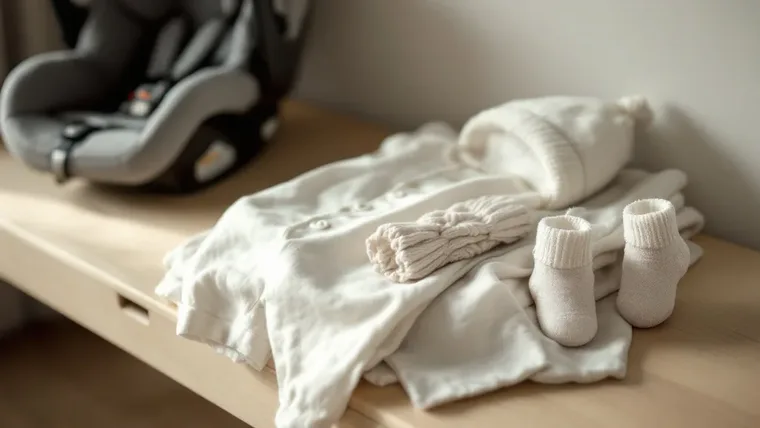
You are close to your due date and you do not want to stand in the hospital hallway without a diaper or an outfit for the ride home. For a newborn hospital bag, what to pack comes down to clothes in two sizes, a car seat that is already installed, feeding items you have checked with your hospital, and a few papers.
Newborn hospital bag: what to pack in one list
Pack the baby's things in a bag of their own. Then your partner or a helper can hand it over without opening yours.
The NHS hospital bag list names these baby items: bodysuits, vests and sleepsuits, an outfit for going home, a hat, scratch mittens, socks or booties, diapers (the NHS says nappies), cotton wool or wipes, muslin squares, a blanket or shawl and a car seat for the trip home. It adds a snowsuit if the weather is cold.
UK hospitals wrote that list. US hospitals may ask for less or for different things, so use it as a starting point.
Clothes by size: pack two outfits for the ride home
Babies arrive in all sizes. A newborn-size outfit can swim on one baby and not close on another. So pack your going-home outfit twice, once in newborn size and once in the next size up.
Then add a few spares. Babies spit up and leak, so one outfit is rarely enough.
| Moment | What goes in | Why it is there |
|---|---|---|
| First hours | Sleepsuit, hat, socks, blanket | Keeps a newborn warm in the first hours |
| The stay | One or two extra onesies, soft shirt, soft pants | Leaks and spit-up |
| Cold weather | Warm layer, snowsuit if it is cold | The NHS list adds a snowsuit for cold weather |
| Going home | Outfit in two sizes | You decide at the door which one fits |
The car seat comes before anything else
The American Academy of Pediatrics says all infants should ride rear-facing, starting with their first ride home from the hospital. So the seat is not an extra. It is the one item the hospital cannot send you home without.
Install it before you pack the rest. Read the manual for the correct angle, because every rear-facing seat has a built-in recline indicator. The same page suggests that expectant parents work with a certified child passenger safety technician before the baby is born.
Keep the manual in the baby's bag. When a helper installs the seat in a hurry, the page with the angle is there.
For a printed list to tick, the Checklist Pack has a page for the baby's hospital bag. It includes the car seat and its manual, and a door list to keep beside the bag. Each file is a PDF in US Letter and A4. Print it on a home printer at 100 percent (not fit to page) and run a test page first. Double-sided is optional. You need no app, no Canva account and no paid software.
Feeding items: bring what your hospital says to bring
Feeding needs differ and so do hospital rules. Ask on your tour what the hospital stocks for the stay.
Planning to breastfeed? Then the packing list for you matters more than the baby's. The NHS suggests nursing bras and breast pads in your own bag. Planning to use formula? Ask whether the hospital provides it for the stay before you bring any.
Pack burp cloths or muslin squares for either method. They cost little and take no room.
Papers and small things for the baby
Most papers belong in your own bag. That means your photo ID, your insurance card and any registration papers. For the baby, add three things:
- the car seat manual
- the name and phone number of the baby's doctor, once you have chosen one
- a bag for used clothes
Keep a small keepsake outfit or blanket if you want one for photos. It is optional and it is not needed for the ride home.
What your hospital may already supply: five questions to ask
Policies vary, so you ask. You can ask on a tour, when you preregister, or by phone.
| Ask | Why it matters |
|---|---|
| Are diapers and wipes supplied for the stay, or should I bring them? | Decides whether they go in the bag |
| Is formula provided if I choose to use it? | Saves you buying a can you may not need |
| Does the baby get a blanket and a hat from you? | Decides what you pack for the first hours |
| Can someone check the car seat before we leave? | Confirms the ride home |
| What do you need from us for the baby's paperwork? | Tells you which papers to bring |
Write the answers next to your list. The NHS list tells UK parents to bring diapers and wipes, which shows how much one country's habit can differ from another's.
When the Checklist Pack is the wrong choice
The Checklist Pack is a print-and-write PDF. If you only want a quick glance at a list on your phone, you do not need it. The lists in this article are enough. It also cannot tell you your hospital's own rules. Your hospital's packing list wins over any printed page, ours included.
A newborn needs very little. What the parents forget is nearly always for themselves.
The bag for you has its own list in the hospital bag checklist, and your partner's bag is covered in what to pack as a dad.
The Checklist Pack holds the baby's page, yours and your support person's in one file.
Frequently asked questions
What is absolutely needed for a newborn?
For the hospital stay, you need a car seat for the ride home, something to wear home, and the diapers, feeding items and papers your hospital asks for. Everything else is a comfort. Ask your hospital what it supplies before you buy extras.
How far in advance should I pack a hospital bag for my baby?
The NHS suggests having the bag packed at least 3 weeks before your due date, in case your baby comes early. It is a suggestion, not a deadline, so follow the timing your care provider gives you.
Conclusion
Pack the baby's bag as its own bag, so anyone can grab it and go. Put clothes in two sizes on top and keep the car seat and its manual by the door. Ask your hospital what it supplies before you buy extras. Once the list is on paper and the bag stands by the door, you have one less thing to remember on the day.
Sources
- NHS, Hospital bag checklist: what to pack for you and your baby (2023) (last checked October 7, 2026)
- American Academy of Pediatrics, Car Seats: Information for Families (2026) (last checked October 7, 2026)